Contents
- What Are Professional Facade Cleaning Services?
- Why Is Facade Cleaning Important?
- Types of Facade Cleaning
- How to Choose the Right Facade Cleaning Company
- 1. Check the company’s experience and track record
- 2. Evaluate their range of services and equipment
- 3. Check customer reviews and feedback
- Conclusion
- FAQs on Types of Façade Cleaning
- Q1. How do you clean a facade?
- Q2. How many types of water-based facade cleaning systems are there?
- Q3. Which chemical is used for chemical facade cleaning?
- Q4. Why is facade cleaning significant?
Keeping the interior of the office visually appealing and functional is important, but it is even more essential to maintain your building’s exterior. It is the first thing people notice, and it can strongly influence both potential and returning clients.
A well-maintained exterior helps you make a positive first impression. It gives your business a polished, trustworthy and welcoming appearance.
On the other hand, a disorganized, unmaintained, and neglected facade can affect your company’s reputation and turn off potential clients—and even your own staff! It can also lower the value of your property. Buildings are constantly exposed to dirt and pollutants, so it’s crucial to have the facades cleaned regularly.
According to market research reports, the facade cleaning service market was worth about USD 1.5 billion in 2023 and is expected to keep growing steadily through 2031.
It is also important to know that different kinds of facades need different cleaning techniques. Keep this in mind before you start looking for a rope access specialist. In this blog, we look at why facade cleaning matters and the different types.
What Are Professional Facade Cleaning Services?
Facade cleaning means removing dirt and stains from the outer surfaces of a building. The facade is the exterior face of the building, especially the front where the entrance is.
Many materials are used for building facades. Some of the most common are glass, stone and aluminium cladding, and some buildings use other metals such as stainless steel.
A building facade can become dirty for various reasons. The weather and pollutants in the air both take their toll, and together they can make a facade look dull, affecting the building’s overall appearance.
How a facade is cleaned depends on its material. The equipment and cleaning solutions are chosen for each material to make sure nothing is damaged during cleaning. The building’s location and use also affect how the facade is cleaned.
Why Is Facade Cleaning Important?
The exterior of your building is the facade. Beyond protecting the building, it largely defines the appearance and appeal of your property.
Simply put, a clean, attractive building is far more appealing than a dirty one. A fresh exterior gives a friendly, welcoming feel and sets the tone for the rest of the building and your company.
- Facades are usually built of stone, brick, concrete, glass and metal. Whether it’s polished stone or gleaming metal, if these attractive features aren’t maintained regularly, they quickly become an eyesore.
- If you rent your building, it’s just as important to keep the facade in good order. Your rental agreement may require you to keep the facade clean at all times.
- Insects, birds and rodents can make their homes in the corners and ledges of a facade. Nests aren’t just an eyesore; they can also cause damage, and droppings leave ugly stains.
Types of Facade Cleaning
Facade cleaning is essential for keeping a building’s appearance and protecting its structure. Here are the main types of facade cleaning:
| High-Pressure Washing: | High-pressure water removes dirt and stains. It is ideal for solid surfaces such as stone, concrete and brick. |
| Soft Washing: | This method combines low-pressure water with a high-quality cleaning solution to remove algae, mold and mildew. It is ideal for delicate surfaces like wood and stucco, and for painted surfaces. |
| Chemical Cleaning: | High-quality cleaning chemicals remove tough stains or graffiti. The chemical must be chosen so that it does not damage the facade material. |
| Abrasive Cleaning: | Materials such as baking soda, glass beads or sand are used to remove tough stains. This method is only suitable for durable surfaces. |
| Steam Cleaning: | Steam cleaning uses high-temperature steam to remove dirt and pollutants. It is especially effective against organic matter, and it sanitizes surfaces without chemicals. |
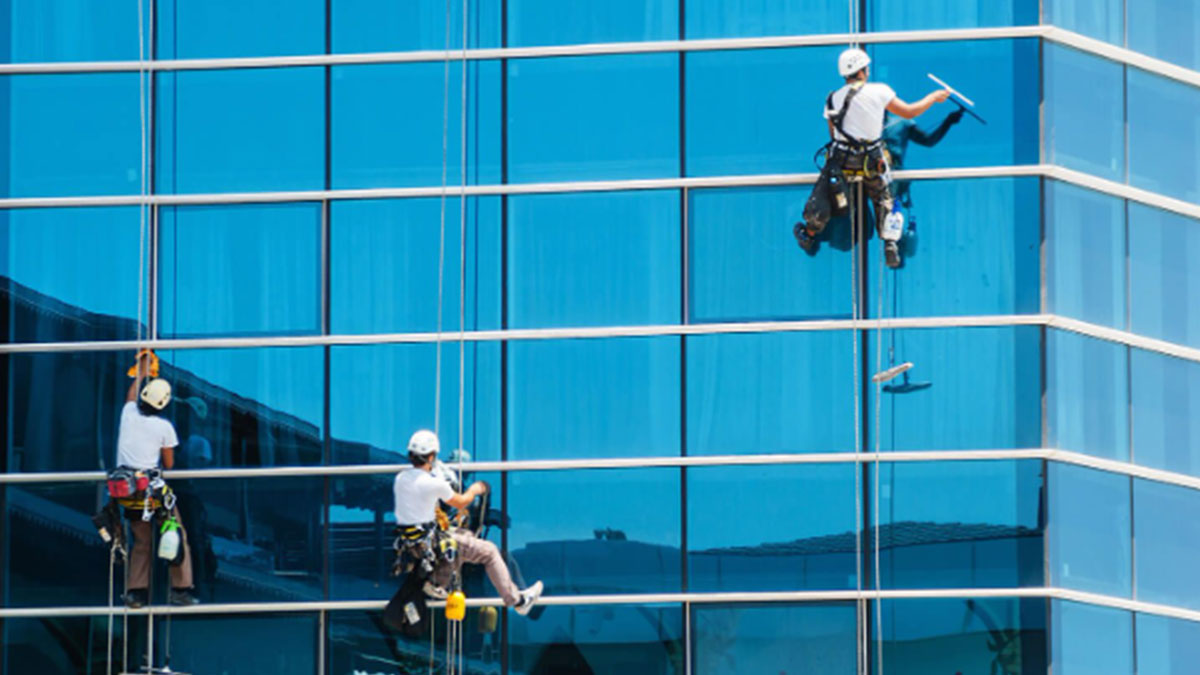
| Rope Access Cleaning: | Certified technicians use ropes and harnesses to clean tall buildings. It is an excellent way to reach difficult or very high areas. |
| Water-Fed Pole System: | Telescopic poles with brushes and purified water remove dirt and grime from windows and glass facades on low- and mid-rise buildings. It is a good solution for cleaning from the ground. |
| Robot-Assisted Cleaning: | Robotic systems are also used to clean large facade areas on some high-rise buildings, improving safety for the cleaners. |
How to Choose the Right Facade Cleaning Company
1. Check the company’s experience and track record
When choosing a facade cleaning company, start with its experience and track record. A company with a good history of work and clients has cleaned many buildings and surfaces, giving it the skills and knowledge to handle whatever your facade presents.
It’s a good idea to ask for case studies or before-and-after photos of previous projects. These show you what the company can do and give you confidence that it can deliver high-quality results. A company’s experience often shows whether it can handle your particular needs efficiently and safely.
2. Evaluate their range of services and equipment
Another important factor is the range of services the company provides. Choose a company that can cover all your building’s exterior cleaning needs. Whether it’s steam cleaning, glass restoration or delicate materials, a one-stop shop saves you time and hassle.
Also check whether the company uses up-to-date equipment and cleaning methods. This shows what the company is capable of, how effective its cleaning is and how committed it is to its work and its clients.
3. Check customer reviews and feedback
Customer reviews and feedback are among the most important things to check. Honest feedback from clients helps you judge the company’s capability, quality of work and customer service. Check reviews on different platforms, or contact references. Positive feedback, on-time completion and professionalism should all weigh in your decision.
Repeated complaints or other red flags will also tell you a lot about the company.
Conclusion
To conclude, it is important to have residential and commercial buildings cleaned regularly. A clean building makes a strong impression on clients: first impressions matter, and your facade is the first thing they see. Cleaning a facade is not an easy task, but professionals make it easy for you.
Hiring professionals gives you the confidence that the job will be done properly. A good facade cleaning company has skilled people, the right products and equipment, and can provide ongoing maintenance. So choose wisely.
FAQs on Types of Façade Cleaning
Q1. How do you clean a facade?
A: For facade glass, mix a mild detergent or a suitable commercial cleaning product with water. Apply it with a washer or applicator in even strokes, then remove it with a squeegee. On tall buildings, this is done by trained technicians working from rope access or a cradle.
Q2. How many types of water-based facade cleaning systems are there?
A: There are three main water-based methods for cleaning facades: pressure washing, soaking, and steam or hot pressurized washing.
Q3. Which chemical is used for chemical facade cleaning?
A: It depends on the material and the type of dirt. Alkaline cleaners are used on acid-sensitive mineral surfaces, while acidic cleaners are used for heavier soiling on suitable mineral surfaces. Strong acid-based cleaners are hazardous and should only be used by trained professionals, after a test on a small area.
Q4. Why is facade cleaning significant?
A: Regular cleaning stops dirt and pollutants from building up. It is not only about appearance: it also helps lower long-term maintenance costs and supports a professional image.